
Published on 2/2/2017
Bosnian Everlasting
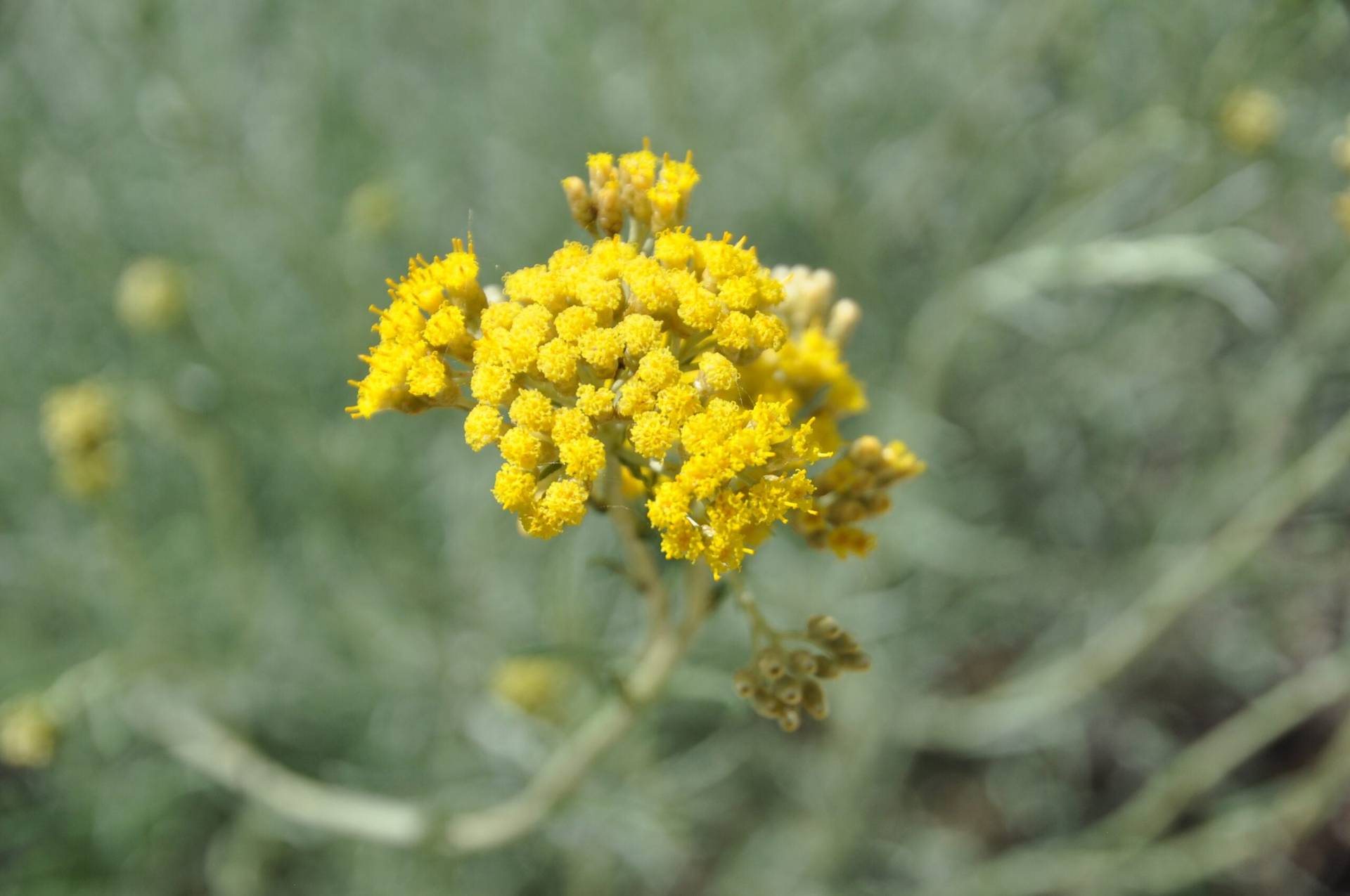
Bosnian Everlasting
A bit of history:
It owes its French name, ‘immortelle’, to the exceptional longevity of its flower heads, which seem never to wilt, even once picked. As is well known, by drying them upside down, they can be preserved for several years. On closer inspection, it is the bracts – the small leaves at the base of the flowers, grouped in a capitulum – that are responsible for this quality.
In perfumery:
The first scent to emerge from immortelle is that of curry. Then, one realises that this lovely plant gives off other scents reminiscent of rose and chamomile. These are honeyed, sweet fragrances, but also salty and spicy. Immortelle lends a distinct character to floral, chypre or amber compositions. Unfortunately, immortelle is rarely used in fine perfumery, perhaps precisely because of its strong character.
Aromatherapy through smell:
Calming, stress-relieving, psychostimulant; when applied to the skin: anti-traumatic, anti-inflammatory, wound-healing. It is the ‘arnica of aromatherapy’. Perfumer and Flavourist, September 2018, Helichrysum italicum D.C. oil from the Balkans
Harvesting immortelle:
The stems are cut with secateurs, leaving 10 to 15 cm of stem at the base. The first harvest takes place during flowering in the third year of cultivation. Once flowering has passed, the yield is lower.
Post-harvest: To dry, the fresh flowers are left in heaps, away from light, so that they do not lose their colour.
Production in Bosnia and Herzegovina:
According to the French Embassy in Bosnia and Herzegovina, everlasting covers between 1,000 and 1,500 ha and has seen significant growth since 2015. (FranceAgrimer-2017)
Interesting fact:
The term ‘Helichrysum’ comes from the Greek ‘helios’, meaning sun, and ‘chrysos’, meaning gold. The French name ‘Immortelle’ is said to derive from the exceptionally long shelf life of the dried bouquets. As an interesting fact, immortelle was also used in 1952 at the coronation of Queen Elizabeth II of England in the form of small bouquets to symbolise the enduring nature of her reign.