
Published on 3/20/2017
The Centifolia Rose
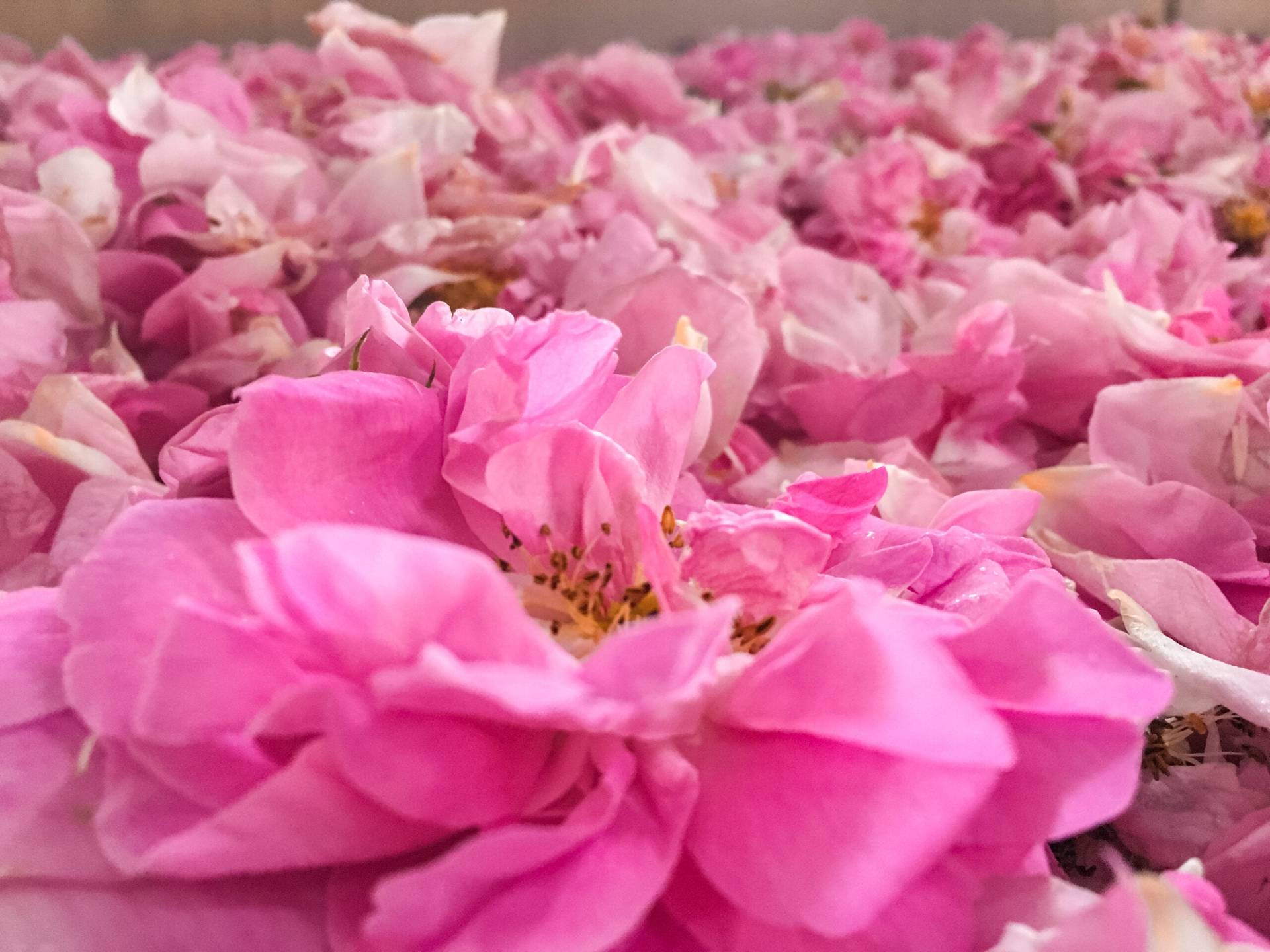
The Centifolia rose, grown in Grasse
For millennia, the rose has held a fascination for people. Throughout history, artists have seen it as an inexhaustible source of inspiration and a symbol of absolute love, to the point of elevating it to the much-coveted status of queen of flowers. Rose breeders have mastered the art of cultivating it, creating countless varieties in different shapes, colours and scents, much to our delight.
A bit of history
The rose was one of the first scents to be used in perfumery. The Romans were already extracting its essential oil and consumed roses in vast quantities, particularly for their fragrance. Their petals were used to fill cushions and to scent baths… Its essence, heady and sensual, was therefore a staple of romantic rituals. It is even said that Cleopatra and Mark Antony spent their first night of love on a bed of rose petals 45 cm thick…
In perfumery
The perfume industry mainly uses the Damask rose (Rosa damascena) and, to a lesser extent, the hundred-petalled rose (Rosa centifolia L.), also known as the ‘May rose’. The olfactory qualities of the Grasse centifolia are such that they feature in the creations of the great names in perfumery; its citrusy note evokes the sun, whilst its spicy and honeyed aspects lend richness and sensuality. Of course, the ‘Rose de Mai Pays’ absolute is used as a base note to lend unrivalled depth to a composition, and clearly brings to mind Chanel No. 5, Joy by Patou… iconic fragrances born in our Grasse region.
The Centifolia rose accounts for no more than 10 per cent of rose production for the perfume industry, compared with the Damascena rose, which is far more common. The latter is mainly grown in Morocco, Turkey, Iran and Bulgaria.
The Centifolia rose grows as a bush. It is a hardy plant with deep roots. Although quite demanding in terms of water and fertiliser, these rose bushes can live for decades if they are spared from disease and pests.
And what about harvesting?
Pruning takes place in February and is necessary to ensure the plant remains vigorous.
Harvesting takes place over a few weeks in May. It is carried out by hand to avoid damaging the flowers.
The flower is sensitive to heat, so it is harvested in the morning during the flowering weeks to preserve its freshness and fragrance.
Extracted whilst fresh, Centifolia rose absolute is the result of meticulous work throughout the entire production process: from tilling the soil to obtain this highly fragile raw material to our expertise in extracting the very best from it.